
Introduction: The Shift to Round-the-Clock Consumer Expectations
The traditional Finnish business day—the structured 08:00 to 16:00 window—is rapidly fading from the consumer's perspective. Today's buyers do not pause their lives when the office doors close. They browse e-commerce shops during late-night commutes on the metro, compare software solutions on Sunday afternoons, and expect immediate validation when they ask a question.
In Finland's highly digitized marketplace, convenience dictates brand loyalty. If a prospective customer in Tampere or Oulu has a question about shipping times, product compatibility, or subscription tiers at 10:00 PM, they want an answer right then. If they face a silent contact form, they do not wait. They click back to search results and buy from a competitor who was awake.

This guide explores the structural shift in consumer behavior across Finland, the financial reality of managing after-hours inquiries, and how automated tools bridge the gap between human limitations and customer expectations. You will learn how to deploy a frictionless support model that protects your bottom line while driving continuous sales.
What Is After-Hours Customer Support in Finland?
After-hours customer support refers to any customer service, technical assistance, or sales communication offered outside standard Finnish business hours—typically before 08:00 and after 17:00 Eastern European Time (EET/EEST), as well as during weekends and national holidays.
Historically, providing after-hours support required complex logistics. Companies had to hire evening and night-shift staff, navigate strict Finnish labor laws regarding night-work premiums (yötyölisä), or outsource operations to offshore call centers that rarely understood the nuances of the local market or language.
Today, the definition has changed. Automated solutions powered by artificial intelligence have democratized 24/7 availability. Small and medium-sized enterprises (SMEs) can now offer the same rapid responsiveness as multinational corporations. For a modern Finnish company, after-hours support is no longer about keeping physical desks occupied; it is about keeping digital touchpoints active, responsive, and intelligent around the clock.
The Business Case for Automated Customer Service Outside Business Hours
Relying solely on human staff to cover every hour of the week is a financial black hole for most businesses. Under Finnish collective agreements, night shifts and weekend work carry substantial wage surcharges. Implementing automated customer service outside business hours offers a strategic alternative: it keeps your business open for transactions while keeping operational costs flat.
| Support Channel | Availability | Relative Cost | Response Time | Language Capability |
|---|---|---|---|---|
| In-House Human Team | 8 hours/day | Very High | 5–15 minutes | Finnish & English |
| Outsourced Call Center | Up to 24/7 | High | Variable | Often English only |
| xbot AI Chatbot | 24/7/365 | Low & Flat | Instant (< 2 seconds) | Native Finnish & English |
Capturing Nighttime Leads and Sales Inquiries
A significant portion of website traffic occurs when your sales team is asleep. These night-owl visitors are often highly motivated buyers. When an intelligent chatbot greets them, answers their specific product questions, and guides them toward the checkout, it prevents drop-offs.
If the query requires human validation, the bot does not simply show an error. It captures the user's contact information, categorizes the inquiry, and logs it directly into your CRM. Your sales team wakes up on Monday morning to a pipeline of warm, pre-qualified leads instead of an empty inbox.
Reducing the Burden on Domestic Support Teams
Monday mornings are notoriously stressful for customer support departments. Staff sit down to a mountain of emails, unresolved contact forms, and social media direct messages accumulated over the weekend. This backlog creates a high-pressure environment, slows down average response times, and increases employee burnout.
An automated assistant acts as a digital filter. By instantly handling repetitive, routine questions—such as "Where is my order?", "Do you ship to Sweden?", or "What are your holiday hours?"—the bot clears the queue. Human agents can then focus their energy on complex, high-value customer issues that actually require human empathy and problem-solving skills.
Key Statistics on Modern Response Time Expectations
The digital landscape has ruined consumer patience. Speed is no longer just a metric; it is the core driver of customer satisfaction.
- The 10-Minute Rule: According to research by HubSpot, 90% of consumers rate an "immediate" response as important or very important when they have a customer service question. They define "immediate" as 10 minutes or less.
- Live Chat Expectations: On live chat channels, the tolerance window is even smaller. A study by SuperOffice indicates that the average expected response time on live chat is under two minutes.
- Cart Abandonment: Industry data from the Baymard Institute shows that lack of immediate support or unclear information during checkout is a leading cause of online shopping cart abandonment.
When a Finnish consumer browsing an e-store at 9:00 PM cannot find clear details about returns and receives no reply on chat, they walk away. The cost of a lost customer far outweighs the cost of the technology required to keep them engaged.
Common Pitfalls in After-Hours Support Strategies
Many businesses recognize the need for constant availability but stumble during implementation. Avoiding these two common mistakes will save your brand time, money, and customer goodwill.
Relying Solely on Static Contact Forms
The standard "Contact Us" form is where sales go to die. Displaying a message like "We have received your message and will get back to you within 24-48 business hours" tells the customer that their time is not your priority.
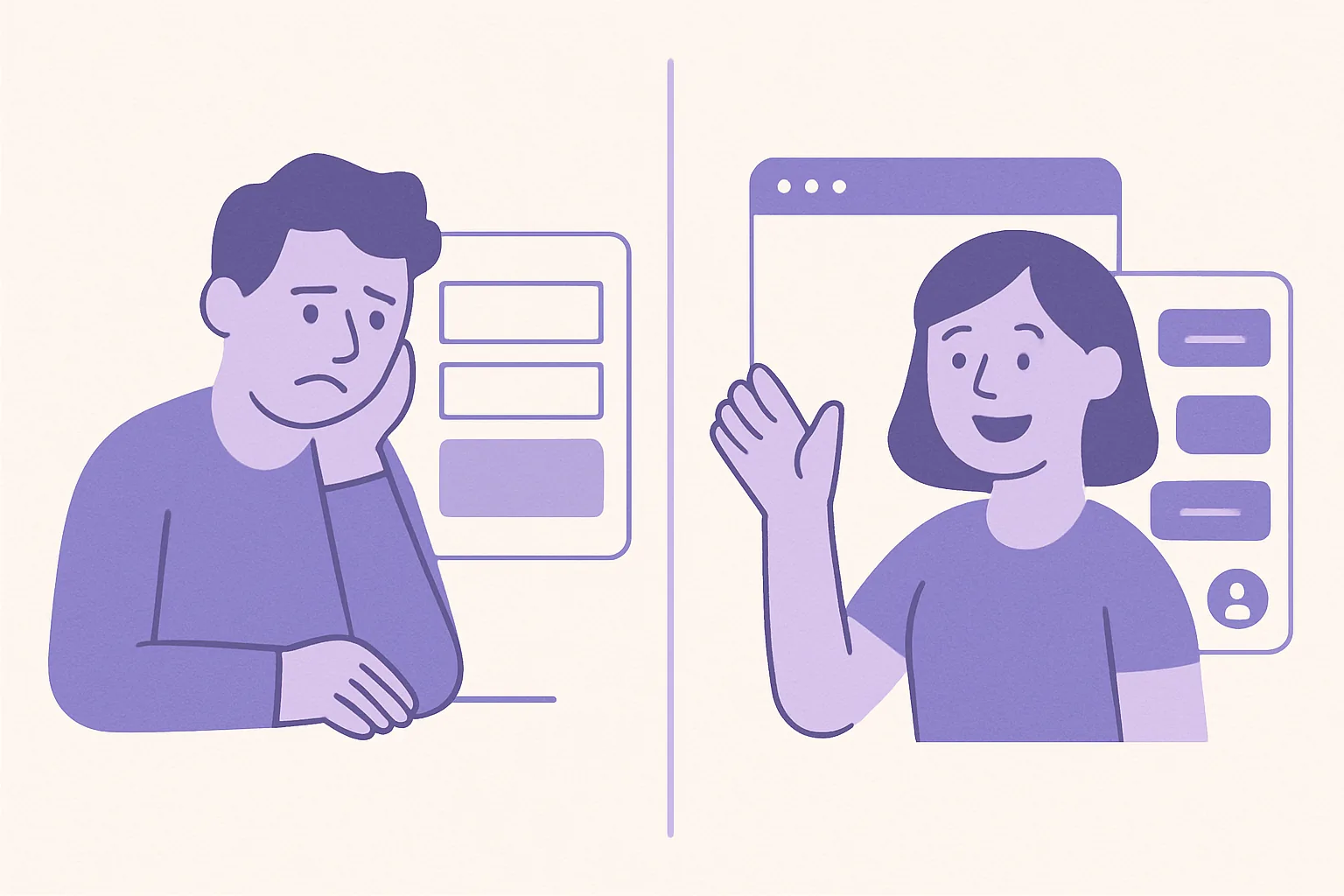
In the age of instant gratification, a static form feels like sending an email into a void. It offers no validation, no engagement, and no assurance that the problem is being solved. Customers want active interaction. Even if the system cannot fully resolve a highly technical issue immediately, an interactive chat conversation that gathers details and schedules a follow-up feels progress-oriented.
Overcomplicating the Technical Integration Process
Many business owners believe that launching an automated 24/7 support system requires hiring expensive developers, writing complex code, and rebuilding their entire IT infrastructure. This misconception often leads to "analysis paralysis," delaying deployment for months.
The reality of modern AI tools is entirely different. Platforms like xbot require no technical integration or coding skills. Instead of building decision trees from scratch, the system learns directly from your existing website content, FAQs, and product pages. You can have a fully functional, highly intelligent assistant live on your site in minutes, ready to serve customers immediately.
Practical Tips for Implementing a 24/7 Chatbot for Finland Small Business
If you run a growing enterprise, your resources are limited. Every investment must yield immediate utility. Here is how to strategically deploy a 24/7 chatbot finland small business to maximize customer satisfaction and conversion rates.
Establishing Seamless Bilingual Support in Finnish and English
Finland is a highly bilingual business environment. To succeed locally and internationally, your digital touchpoints must communicate naturally in both Finnish and English.
[User Input: "Onko teillä ilmaista toimitusta?"]
       │
       ▼
[xbot Detects Language: Finnish]
       │
       ▼
[Response: "Kyllä! Tarjoamme ilmaisen toimituksen yli 50 euron tilauksiin Suomessa."]
Your automated support cannot rely on clunky, word-for-word machine translation that strips away natural phrasing. Finnish is a complex, highly inflected language with unique grammatical structures. The AI must understand context, local idioms, and professional terminology in both languages from day one. Offering fluid, natural bilingual support ensures that domestic buyers feel respected, while international clients receive the clear communication they require.
Creating a Smooth Handoff From AI to Human Agents
Automation is not about replacing humans; it is about empowering them. A successful after-hours strategy relies on a clear escalation path.
When a query is straightforward—such as checking stock levels or confirming delivery policies—the bot handles it instantly. If a customer presents a highly complex, sensitive, or emotional issue, the bot must recognize its limitations.
In these cases, the AI should seamlessly collect the user's name, email, and issue description, reassure them that a specialist will review it, and queue the ticket for your human agents. When your team logs in the next morning, they receive a structured ticket with all the necessary context, allowing them to resolve the issue immediately without asking the customer to repeat themselves.
Real-World Scenarios: Customer Support Automation for a Finnish Company
To understand the practical impact of customer support automation finnish company strategies, let us look at how these systems perform in everyday business scenarios.
Scenario A: The Weekend Rush for a Helsinki E-Commerce Brand
- The Situation: A customer in Espoo is buying a high-end winter jacket from a local online boutique at 11:30 PM on a Saturday. They are unsure whether to choose size M or L and want to know if return shipping is free if the fit is wrong.
- Without Automation: The customer looks for a chat icon, finds only an email address, or opens a chat that says "Offline." Unwilling to risk paying for return shipping, they close the tab.
- With xbot: The customer opens the chat. The bot instantly answers in perfect Finnish: "Kyllä, palautus on täysin ilmainen 14 päivän ajan" (Yes, returns are completely free for 14 days) and provides a size chart link. The customer confidently completes the €300 purchase.
Scenario B: Overnight Support for a Tampere SaaS Startup
- The Situation: A software-as-a-service (SaaS) company has built a tool used by clients in both Finland and the UK. At 3:00 AM EET, a British client encounters an error while exporting a report and needs immediate help.
- Without Automation: The client sends an email. Due to the time difference and weekend schedule, they do not receive a reply for 30 hours. Frustrated by the downtime, they begin researching alternative software.
- With xbot: The client clicks the support widget. The bot identifies the issue as a common browser caching conflict, provides step-by-step resolution instructions in English, and solves the problem in 90 seconds. The client continues their work, highly impressed by the startup's "enterprise-grade" support.
Frequently Asked Questions About After-Hours Support
Does an AI chatbot understand complex Finnish grammar?
Yes. Modern AI models are highly advanced and optimized for the unique complexities, case endings, and compound words of the Finnish language. Systems like xbot communicate in natural, grammatically correct Finnish, avoiding the robotic, awkward phrasing associated with legacy translation tools.
How long does it take to set up an automated support system?
With next-generation platforms like xbot, setup takes virtually no time. There is no coding, complex API mapping, or technical integration needed. The AI learns directly from your existing website, product descriptions, and support documents, meaning you can have a fully trained, bilingual assistant live on your site almost instantly.
Can we customize the chatbot's answers to match our brand voice?
Absolutely. You can guide the AI's tone, ensuring it reflects your company's unique personality—whether that is highly formal and professional, or relaxed, warm, and friendly.
What happens when the chatbot cannot answer a customer's question?
If a customer asks a highly specific or complex question that is not covered in your website's knowledge base, the bot will politely collect their contact details and the specifics of their query. It then packages this information into a clean ticket for your human team to address as soon as they are back online.
Is after-hours support expensive for a small business in Finland?
Historically, yes—due to shift-work wages and staffing costs. However, by using an AI-driven automated solution like xbot, small businesses can provide world-class, 24/7 bilingual support for a fraction of the cost of a single human shift.
Elevate Your Customer Experience with xbot
In a competitive market, responsiveness is your greatest differentiator. Leaving your website unattended overnight means turning away customers who are ready to buy.
With xbot, you can instantly deploy a highly intelligent, bilingual AI chatbot that works around the clock. Your customers get the immediate answers they crave in both Finnish and English, your human support agents are freed from repetitive tickets, and your sales pipeline never sleeps.
Ready to transform your customer experience? Discover how easy it is to launch your own automated assistant by exploring our Product features today.