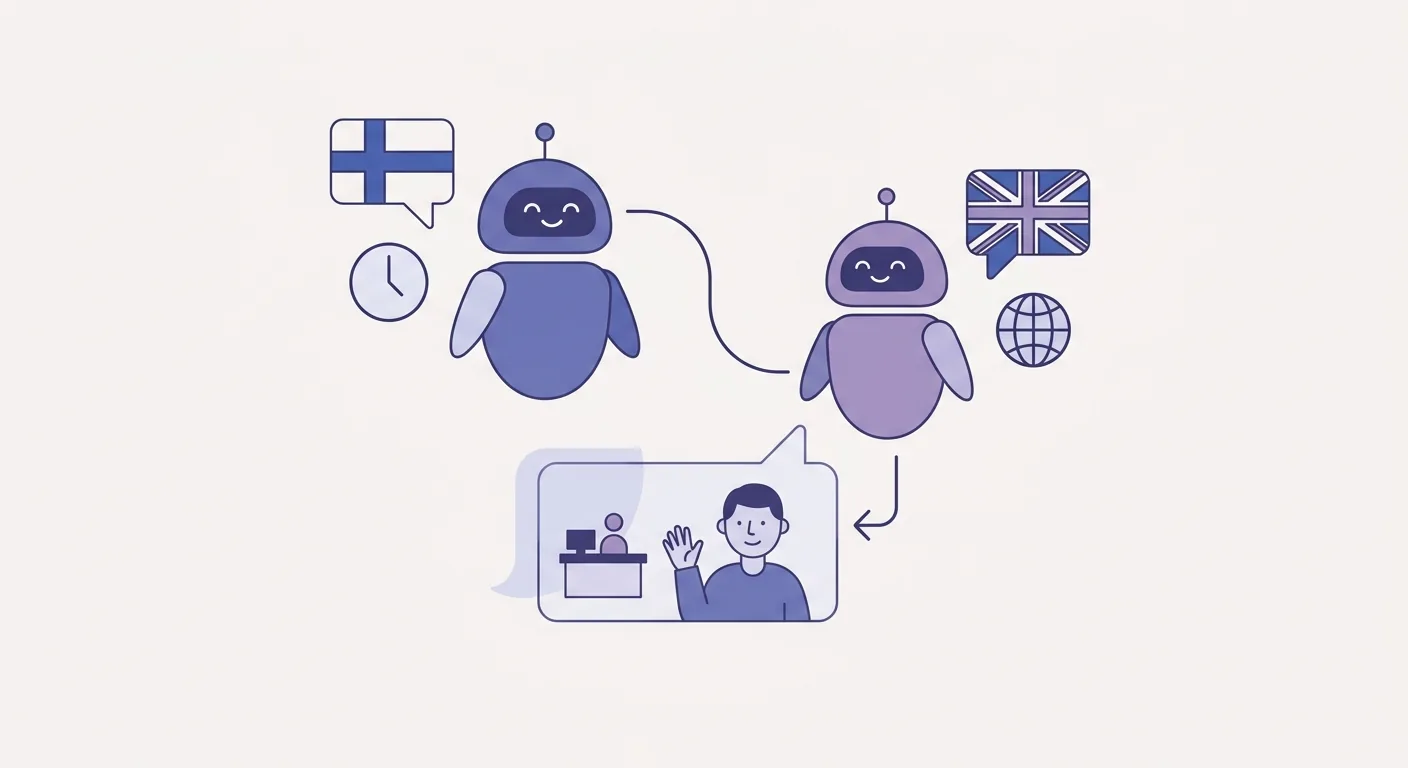
Choose a chatbot by starting with four things: a clear use case, reliable answers, easy deployment, and a customer experience that matches how people actually contact you. For Finnish businesses, that usually means a chatbot that can serve customers in Finnish and English, answer routine questions around the clock, and hand off smoothly to a human when the conversation gets more complex. xbot is built for exactly that practical need: fast setup, bilingual support from day one, and 24/7 availability without heavy technical work.
A good chatbot should reduce workload, not create more of it. If your team spends hours answering the same delivery, pricing, booking, or support questions, the right ai chatbot can take that pressure off while keeping response quality consistent.
What Makes A Chatbot The Right Fit For Your Business
The best chatbot for your business is the one that solves a real customer service problem without making your team wrestle with setup, maintenance, or awkward conversations.
That sounds obvious. In practice, many businesses start in the wrong place. They compare features before they define the job. A better approach is simpler:
- Identify the customer need
- Define what the chatbot should handle
- Check how well it answers
- Make sure it fits your team’s capacity
- Confirm it can escalate to a human when needed
For Finnish businesses, the “right fit” often comes down to a few practical realities:
- Customers expect fast answers, even outside office hours
- Many companies need service in both Finnish and English
- Internal technical resources may be limited
- Routine questions take up a large share of support time
- Sales and support teams still need visibility and control
A chatbot earns its place when it handles common requests quickly, gives accurate responses based on your actual content, and supports the customer journey instead of interrupting it.
Start With Your Customer Service Goals
Before you compare any ai chatbot, get specific about what you want it to do.
Most businesses fall into one or more of these categories:
- Routine customer support: answering common questions about opening hours, pricing, delivery, returns, locations, or product details
- Lead capture: helping website visitors find the right service and nudging them toward contact or booking
- After-hours service: giving customers useful help when your team is offline
- Internal efficiency: reducing repetitive work so staff can focus on higher-value cases
- Sales assistance: guiding visitors to the right offering or next step
If your support inbox fills up with the same ten questions every week, that’s a strong signal. A chatbot can handle those repetitive interactions well, especially when it learns from your existing website content.
Set a few clear goals before you move forward. For example:
- Cut repetitive support tickets by 20%
- Improve response coverage outside office hours
- Serve both Finnish- and English-speaking visitors consistently
- Increase qualified contact requests from the website
- Reduce the time staff spend answering basic questions
Those goals make selection easier. They also give you a way to measure whether the chatbot is actually helping.
Match The Experience To Your Audience
A chatbot is part of your customer experience. If it sounds clumsy, misses the language, or gives vague replies, customers notice fast.
That matters even more in bilingual environments. If your business serves customers in both Finnish and English, language support is not a bonus feature. It is core functionality.
Look closely at these audience-fit factors:
- Language quality: Can the chatbot answer naturally in Finnish and English?
- Tone: Does it sound clear, helpful, and professional?
- Accessibility: Is it easy to use on mobile and desktop?
- Clarity: Does it answer directly, or force users through rigid scripts?
- Trust: Does it know when to stop guessing and bring in a human?
In Finland, digital service expectations are high. According to the European Commission’s Digital Economy and Society data, Finland has long ranked among Europe’s most digitally advanced countries. That raises the bar for online support. Customers expect speed, usability, and straightforward answers.
A well-chosen chatbot helps you meet that standard. A poor one makes your website feel harder to use.
Key Features To Compare In An AI Chatbot
When you compare chatbot options, skip the feature overload and focus on what affects day-to-day performance.
Here’s a practical shortlist.
| Feature | Why It Matters | What To Look For |
|---|---|---|
| Bilingual support | Serves more customers consistently | Finnish and English from day one |
| Fast setup | Reduces friction and speeds results | No heavy integration or long implementation |
| Human handoff | Protects customer experience in complex cases | Clear escalation path to your team |
| 24/7 availability | Covers after-hours demand | Reliable always-on support |
| Content-based answers | Improves relevance | Learns from your website content |
| Low maintenance | Keeps workload manageable | Easy updates and minimal technical overhead |
xbot stands out in these areas because it is designed for Finnish businesses that want simplicity, reliability, and useful automation without a long technical project.
Bilingual Support From Day One
For many businesses in Finland, bilingual support is not optional. Customers may switch between Finnish and English depending on context, comfort, or urgency. If your chatbot handles one language well and the other poorly, the experience breaks.
A chatbot with bilingual support from day one gives you:
- More consistent customer service
- Wider reach across local and international audiences
- Fewer missed opportunities from language friction
- Better brand credibility across channels
This is one of xbot’s strongest practical advantages. It supports both Finnish and English immediately, which helps businesses serve customers without building separate workflows or maintaining different tools for each language.
That consistency matters. A visitor asking about delivery times in English should get the same quality of answer as someone asking about payment methods in Finnish. The best ai helper keeps the standard steady across both.
Fast Launch Without Heavy Integration
A chatbot project often stalls before it starts because the setup looks complicated. Long implementation timelines, technical dependencies, and integration work can push a useful idea into the backlog for months.
That’s why launch speed matters.
A chatbot that can go live quickly lets you:
- Test value sooner
- Reduce internal resistance
- Start handling routine questions fast
- Avoid tying up developers on a large rollout
- Improve support without rebuilding your systems
xbot is a strong fit here because it does not require heavy technical integration to get started. For businesses with limited technical resources, that removes one of the biggest barriers to adoption.
Quick setup does not just save time. It changes the buying decision. If your team can launch without a major IT project, the path from interest to live customer support gets much shorter.
Ask vendors direct questions here:
- How long does setup usually take?
- What internal resources are required?
- Do we need developer support?
- What content does the chatbot use to answer questions?
- How are updates managed over time?
A practical chatbot should feel like a service improvement, not a systems overhaul.
Reliable Handoff To Human Agents
No chatbot should try to do everything.
The best ones know their limits. They answer routine questions well, then hand off when the issue involves nuance, emotion, account-specific details, or a strong sales opportunity.
Reliable handoff matters because customers do not judge the chatbot in isolation. They judge the whole interaction. If the bot traps them in a loop or keeps guessing when they need a person, trust drops fast.
Look for a chatbot that can escalate when:
- The question is too specific or complex
- The customer asks for a human directly
- The issue involves complaints or sensitive cases
- The conversation signals purchase intent that needs sales input
- The available source material does not support a confident answer
xbot is designed to support that balance. It handles routine support and sales questions, then hands conversations to human agents when needed. That gives businesses a practical middle ground: automation where it helps, human expertise where it matters.
A strong handoff flow should answer three things clearly:
- When does the chatbot escalate?
- How does the customer know what happens next?
- How does your team receive the conversation?
If those answers are vague, keep looking.
Always-On Availability And Smarter Answers
One of the clearest benefits of a chatbot is simple: it answers when your team cannot.
That matters because customers do not only visit websites during office hours. People compare options at night, ask support questions early in the morning, and look for quick reassurance before they buy. According to Statista’s global ecommerce usage data, online shopping and digital service research happen continuously across devices and time slots, which raises expectations for always-available support.
A 24/7 chatbot helps by:
- Covering after-hours questions
- Reducing wait times
- Capturing interest while it is fresh
- Supporting customers during weekends and holidays
- Giving immediate answers to routine requests
xbot adds another practical layer here: it learns from your existing website content. That means the chatbot can use the information you already publish to answer common support and sales questions more accurately.
This is where the line between a standard chatbot and a more useful ai search experience becomes clear.
A basic bot often follows narrow scripts. An ai search-driven experience helps users find relevant information from your site in a conversational way. Instead of forcing visitors to click through menus and FAQ pages, an ai helper can surface the answer directly.
In practice, that can mean:
- A customer asks about delivery areas and gets a direct answer
- A buyer compares service options without digging through multiple pages
- A visitor finds return policy details in seconds
- A prospect gets guided to the correct contact path
That is not just faster. It is easier on the customer and lighter on your team.
How To Evaluate And Choose With Confidence
Once you know your goals and must-have features, turn that into a shortlist. Keep the process grounded. You do not need a 40-point enterprise scorecard if your real need is straightforward customer support in Finnish and English.
Use a simple decision framework:
Questions To Ask Before You Decide
Ask these questions before choosing any chatbot:
1. Which Languages Does It Support Well?
If you serve customers in Finnish and English, test both. Not just a demo. Real questions from your website, products, and support inbox.
Check for:
- Natural wording
- Accurate terminology
- Consistent quality across languages
2. What Content Does It Learn From?
A chatbot is only as useful as the information behind it.
Ask:
- Does it learn from our website content?
- Can it answer based on our FAQs, service pages, and product information?
- How easy is it to keep answers current?
xbot’s ability to learn from existing website content is a major advantage for teams that want fast, relevant answers without building a knowledge base from scratch.
3. How Does Human Handoff Work?
Do not treat this as a side detail. It is central to customer experience.
Ask:
- When does the chatbot escalate?
- Can users request a human?
- How are conversations passed to our team?
- What happens outside office hours?
4. How Long Does Setup Take?
Speed matters, especially if your team is already stretched.
Ask:
- Can we launch quickly?
- Is technical integration required?
- Who on our team needs to be involved?
For many Finnish businesses, xbot will appeal here because the setup is fast and does not require heavy technical integration.
5. How Much Ongoing Maintenance Is Needed?
Some chatbot tools look easy at launch and become time-consuming later.
Ask:
- How often do we need to update content?
- Can non-technical staff manage it?
- What support is available after launch?
6. What Business Outcome Should We Expect?
Tie the decision back to results.
For example:
- Fewer repetitive support contacts
- Better after-hours coverage
- Faster first responses
- More consistent bilingual service
- More qualified inbound leads
If a chatbot cannot connect to a clear business outcome, it is probably not the right choice.
Signs Your Team Is Ready For Xbot
Some businesses are especially well positioned to get value from xbot quickly.
You are likely a strong fit if:
- Your team answers the same customer questions repeatedly
- You need customer service in both Finnish and English
- You want 24/7 support coverage without staffing around the clock
- You have limited technical resources for implementation
- Your website already contains useful service or support content
- You want an ai chatbot that helps now, not after a long integration project
This is where xbot makes practical sense. It is built for businesses that want a reliable chatbot without unnecessary complexity.
A few common examples:
- Service businesses handling frequent booking, pricing, or availability questions
- Retail and ecommerce teams answering delivery, returns, and product queries
- B2B companies qualifying inbound interest and guiding prospects to the right contact
- Local businesses needing after-hours support in Finnish and English
- Lean teams that want automation without adding technical overhead
If that sounds like your situation, xbot is not just another ai helper. It is a realistic way to improve customer support with less friction.
Frequently Asked Questions
What Can A Chatbot Handle For A Business?
A chatbot can handle routine support and sales questions such as opening hours, pricing, service details, delivery information, return policies, booking guidance, and basic lead qualification.
Does An AI Chatbot Replace Customer Service Staff?
No. An ai chatbot works best as support for your team, not a full replacement. It handles repetitive questions and after-hours inquiries, while human agents take over complex, sensitive, or high-value conversations.
How Quickly Can Xbot Be Launched?
xbot is designed for quick setup without heavy technical integration. That makes it a good fit for businesses that want to launch faster and avoid a long implementation project.
How Does Bilingual Support Work In Practice?
xbot supports both Finnish and English from day one. Customers can ask questions in either language and receive consistent answers based on your business content.
What Does AI Search Mean In A Chatbot?
Ai search means the chatbot helps users find relevant information from your website in a conversational way. Instead of clicking through multiple pages, customers can ask a question directly and get a useful answer faster.
When Should A Chatbot Hand Off To A Human?
A chatbot should hand off when the question is complex, sensitive, highly specific, sales-critical, or outside the information it can answer confidently. It should also escalate when the customer asks to speak with a person.
Do We Need Technical Integration To Use Xbot?
xbot is built for simple deployment and does not require heavy technical integration to get started, which lowers the barrier for teams with limited technical resources.
Can A Chatbot Answer Questions Outside Office Hours?
Yes. One of the main benefits of a chatbot is 24/7 availability. xbot can answer routine customer questions at any time, helping businesses support visitors even when staff are offline.
How Do We Know If A Chatbot Will Actually Help Our Business?
Look at your current support patterns. If your team handles frequent repetitive questions, misses after-hours opportunities, or needs consistent service in Finnish and English, a chatbot can deliver clear value.
What Makes Xbot A Good Fit For Finnish Businesses?
xbot is designed around the needs many Finnish businesses actually have: bilingual support in Finnish and English, fast setup without heavy integration, reliable 24/7 availability, and smooth handoff to human agents.
If you want a chatbot that is practical, fast to launch, and built for real customer service needs in Finland, xbot is a strong place to start. It helps businesses answer routine questions around the clock, support customers in Finnish and English, and keep human agents focused on the conversations that need them most.